




















Your First NDIS Home Support Visit in Sydney: What to Expect
Starting NDIS home support can feel like a big step. Knowing what to ask before your first visit can help you feel more comfortable and make sure the support suits your routine.
Your first visit is a chance to explain what you would like help with, what you prefer to do yourself and how you want your support worker to assist you. You can also discuss costs, privacy and what happens if your plans change.
This guide covers how to prepare for your first NDIS home support visit in Sydney, with questions you can ask and a note you can copy.
What is NDIS home support?
NDIS home support can help you with everyday activities at home. Depending on your needs and the supports available to you, this may include help with:
- Personal care, such as dressing or grooming
- Preparing meals and cleaning up
- Household tasks
- Shopping and other activities in the community
The aim is to provide support that works for you and your goals. Before booking, check whether the support you want can be paid for with your NDIS funding.
What happens at your first home support visit?
Your first visit will depend on what you have agreed with your provider. It may include meeting your support worker, talking through your routine and starting the tasks you have chosen.
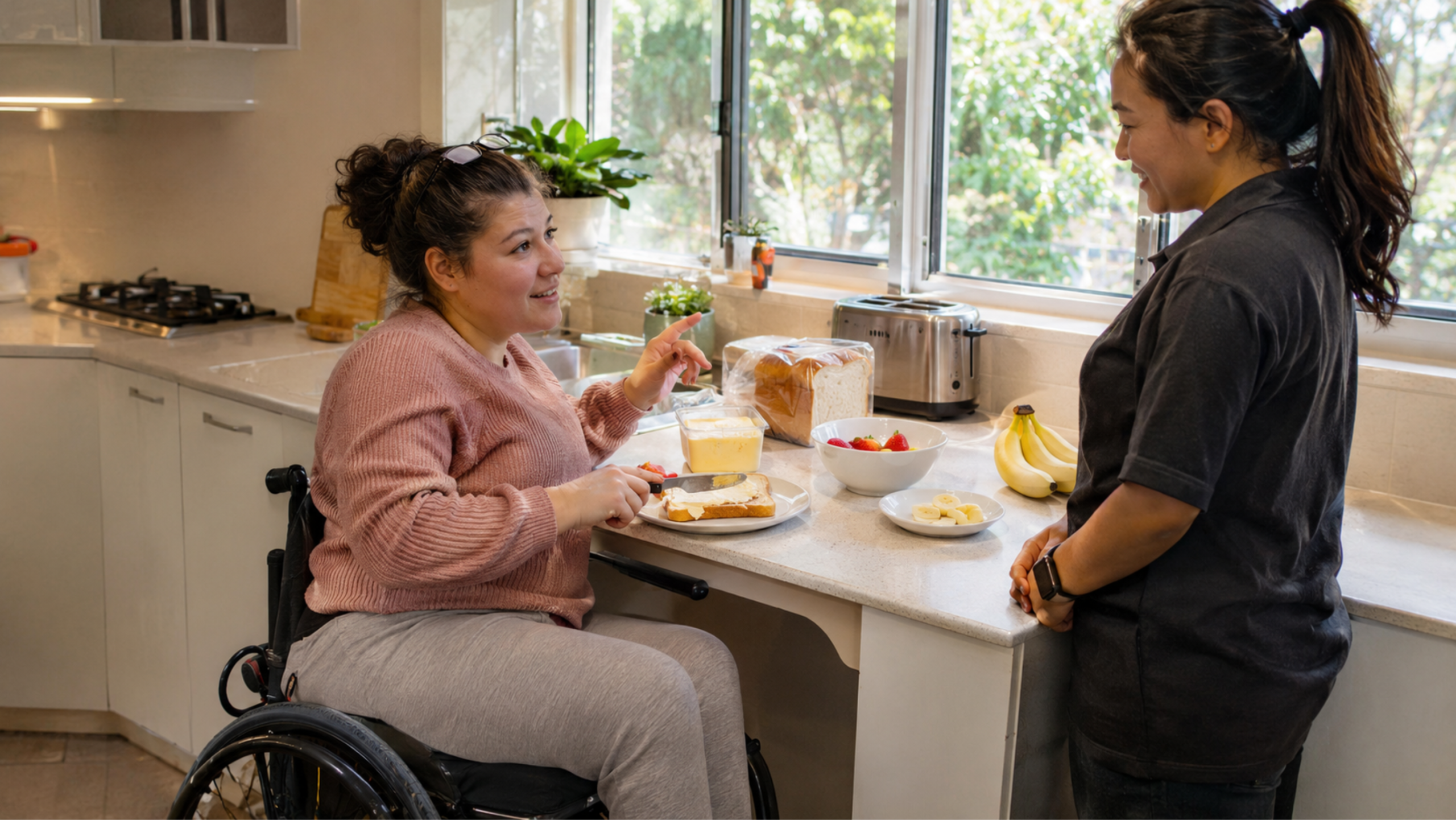
For example, if you want help with breakfast, you might explain where things are kept, which steps you want to do yourself and when you would like your worker to help.
You do not need to explain everything at once. You can ask questions, take breaks and discuss changes after the visit.
1. Decide what you would like help with
Start by thinking about a typical day. Is there one activity you would like help with, or a task you want to do more independently?
For example, you could say:
“I’d like to make my own breakfast. Please help me set out the ingredients and wash up afterwards.”
It may also help to tell your provider:
- Which tasks you want to do yourself
- Which tasks you would like to do with your worker
- The days and times that suit you
- How you prefer to communicate
- Any routines that matter to you, such as prayer times, rest breaks or quiet time during meals
If someone helps you prepare for the conversation, you can decide what you want them to explain and what you would like to say yourself.
2. Ask about NDIS home support costs
Before you book, ask the provider to explain the cost of your support. Tell them how your NDIS funding is managed and check whether the support can be paid for from your plan.
Questions to ask include:
- What is the hourly rate?
- How long will each visit be, and what is the expected total cost?
- Are there extra charges, such as travel?
- How much notice do I need to give if I cancel or change a visit?
- What happens if my worker cannot attend?
- Who receives and pays the invoice?
You can ask for the details in a format that works for you. The NDIS explains what you may want to include in a service agreement, including prices, extra charges and cancellation terms. NDIS
3. Talk about personal care, privacy and boundaries
You have a right to be treated with respect. Tell your provider and support worker what helps you feel safe and comfortable, especially if you need help with personal care.
For example, you might say:
“Please close the door, explain each step and ask before you touch me. If I ask you to pause, please stop.”
You can also ask your worker to:
- Speak directly to you
- Give you time to answer
- Ask before moving your belongings
- Explain what they are doing
- Check with you before sharing updates with someone else
Before sharing private information, ask why the provider needs it and how they will keep it safe. You can choose which parts of your NDIS plan to share with a provider. Read the NDIS guide to sharing your plan.
4. Explain what matters to you in a support worker
A good starting point is to tell the provider what you are looking for in a worker. For example, you may prefer someone who speaks your language or understands a cultural practice that matters to you.
If you need help with medication, eating or moving from a bed to a chair, tell the provider before the visit. Ask how they check that the worker has the right skills and instructions to support you safely.
You may also want to ask:
- Can I speak with or meet the worker before the first visit?
- Will I usually see the same worker?
- If a different worker visits, how will they learn about my routine?
- Who can I contact if I feel uncomfortable or want a different worker?
The NDIS Code of Conduct applies to registered and unregistered providers and their workers.
5. Prepare for your first visit
Before your worker arrives, confirm:
- Their name and expected arrival time
- The tasks you have agreed on
- How long the visit will last
- Who to contact if the worker is late or plans change
- Whether you would prefer them to knock, ring the bell or call on arrival
You can also mention anything that will help them reach you, such as parking, stairs or pets. If they need a door code, agree on a private way to share it.
You do not need to tidy your whole home before the visit.
A first-visit note you can copy
You can use this example to prepare for your visit. Change it to suit your own routine. If you have care instructions or a support plan, use this note alongside them.
| What to write down | Example |
|---|---|
| My goal | I want to prepare breakfast with less help. |
| Where I would like help | Please set out the ingredients and help me wash up. |
| What I want to do myself | I’ll choose what to eat and do the steps I’m comfortable with. |
| How to communicate with me | Ask me one question at a time and give me time to answer. |
| Please ask me first | Please ask before opening the cupboards. |
| What to discuss afterwards | Did we have enough time? What should we change next time? |
What should I do after my first visit?
Take a moment to think about what worked and what you would like to change. You may want to ask yourself:
- Did I have enough time to do the things that mattered to me?
- Did the worker understand how I wanted to be supported?
- Did I feel comfortable asking questions or taking a break?
- Would a different time, routine or worker suit me better?
Share your feedback with the provider. You can ask to change the way support is provided or discuss your concerns before the next visit.
Frequently asked questions about NDIS home support
Do I need a written service agreement?
For most NDIS supports, a written service agreement is not required by the NDIA. However, a written agreement can help you and your provider understand what you have agreed to.
A written agreement is required for specialist disability accommodation supports. Read more in the NDIS service agreement guidance. ndis.gov.au
Can a family member or carer join the first conversation?
Yes. You can invite someone you trust and explain how you would like them to help.
For example, you could say:
“I’d like my sister to take notes. Please ask me the questions and check with me before sending her updates.”
Can I change my support worker?
If you are uncomfortable or feel that your worker is not the right fit, speak with your provider. Explain what you would like to change and ask about the available options.
When can home support start in my Sydney suburb?
Start dates depend on your needs and worker availability. Give the provider your suburb, preferred days and times, and details of the support you need. Ask them to confirm a start date before you book.
Ask Seed about NDIS home support in Sydney
Seed Disability Services offers support with personal care, household tasks, meals and shopping. You can also ask the team about overnight support and whether a worker is available in your suburb.
Learn more about Seed’s Home & Community Care service.
To discuss your needs, use the online enquiry form, email info@seeddisabilityservices.com.au or call 0493 811 024.